Exhibition Building
From concept to constructed experience.
With the concept established and the visual system defined, attention shifted toward construction.
The challenge was no longer creating individual images. The challenge became organizing those images into a coherent exhibition capable of telling a story across centuries while maintaining consistency, atmosphere, and emotional continuity.
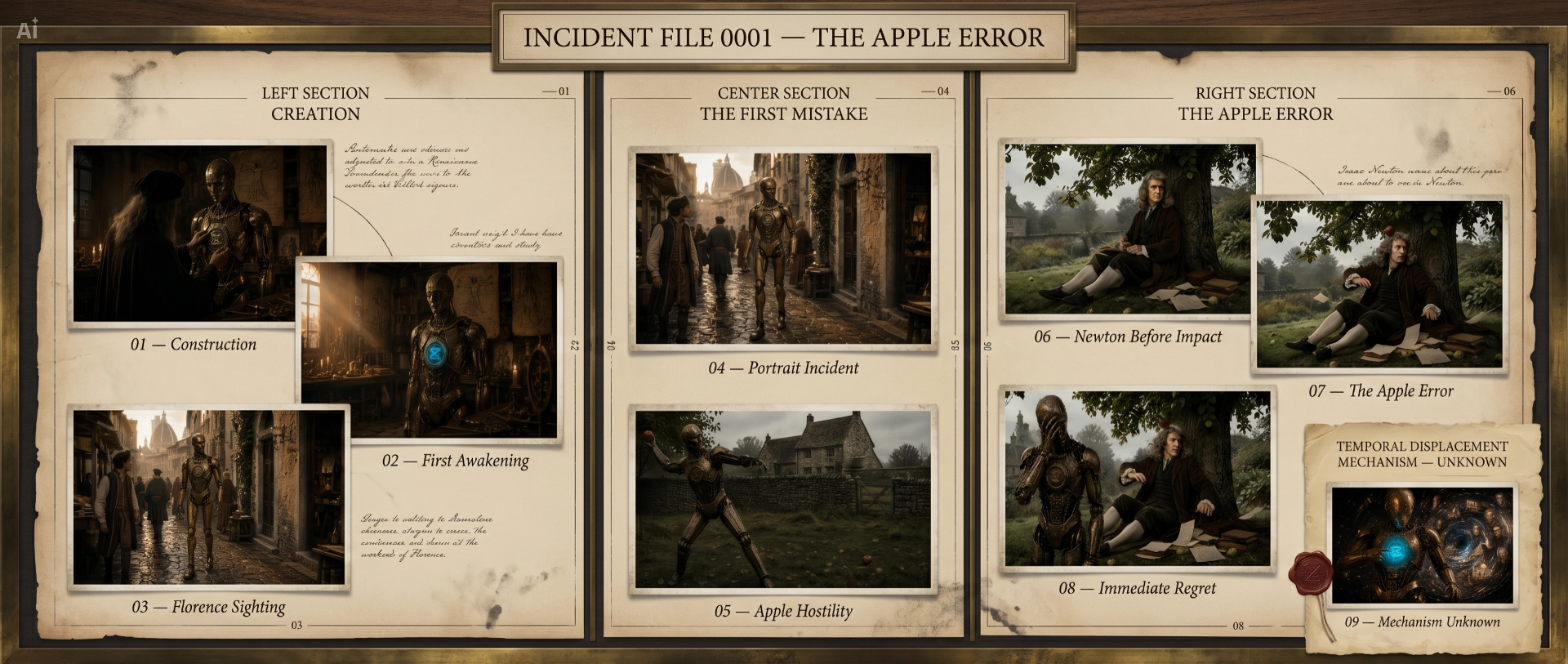
Building The First Incident
Every exhibition needs a beginning.
The Apple Error became the foundation of the entire project. It established the core narrative idea: a machine wandering through history and unintentionally altering events through its presence.
The sequence introduced Florence, Leonardo da Vinci, the awakening of the automaton, the portrait incident, and the first accidental intervention.
Rather than functioning as isolated images, these scenes were assembled as a complete narrative sequence.
The project gained its direction here.
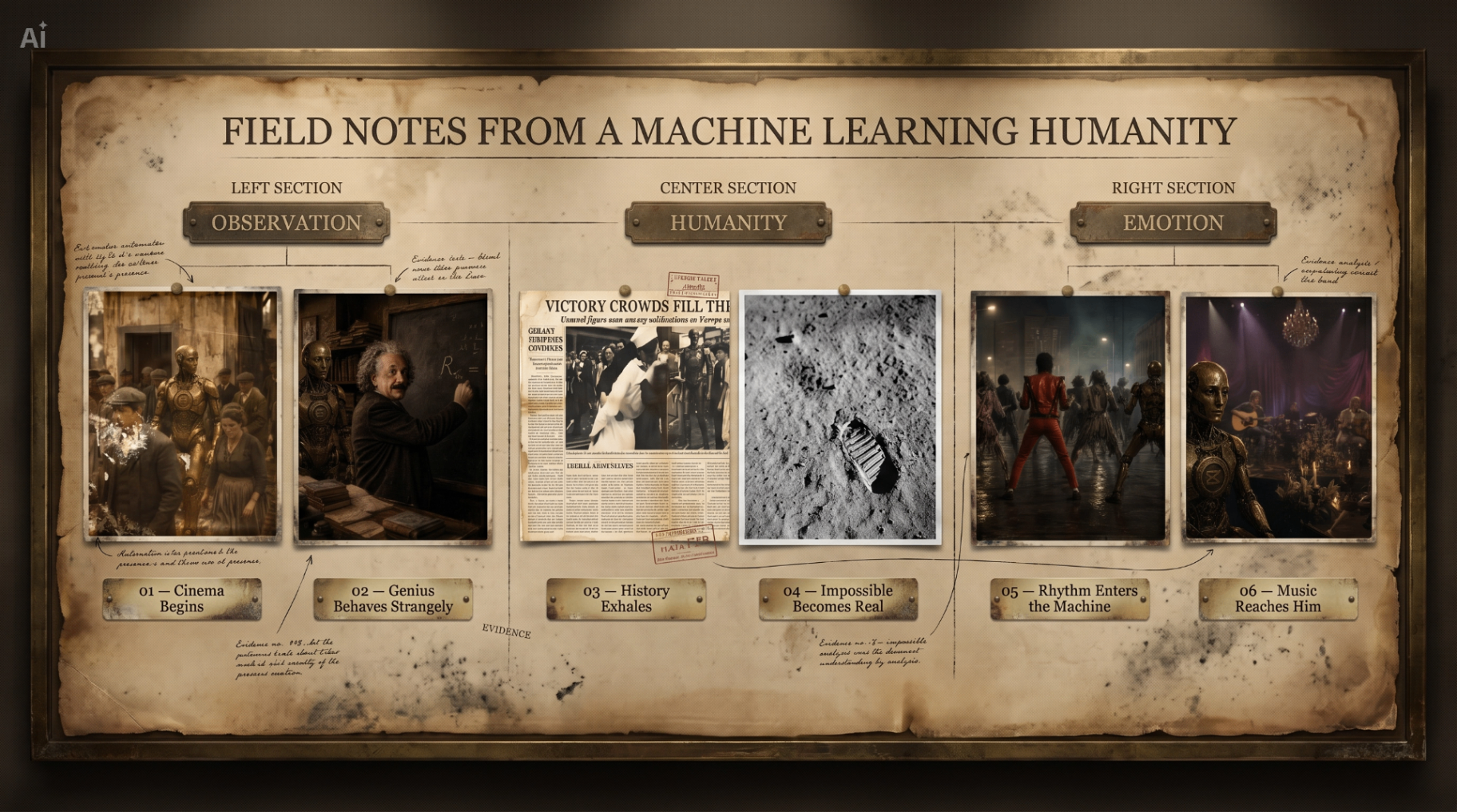
Expanding Through History
Once the origin story was established, the project expanded outward into human history.
Instead of focusing on major historical figures alone, the exhibition explored moments of invention, celebration, culture, science, and memory.
The automaton remained a quiet observer.
Workers leaving factories, scientific discoveries, wartime celebrations, moon landings, music, and public life became opportunities to examine how history might accidentally contain something impossible.
This board established the broader scope of the project.
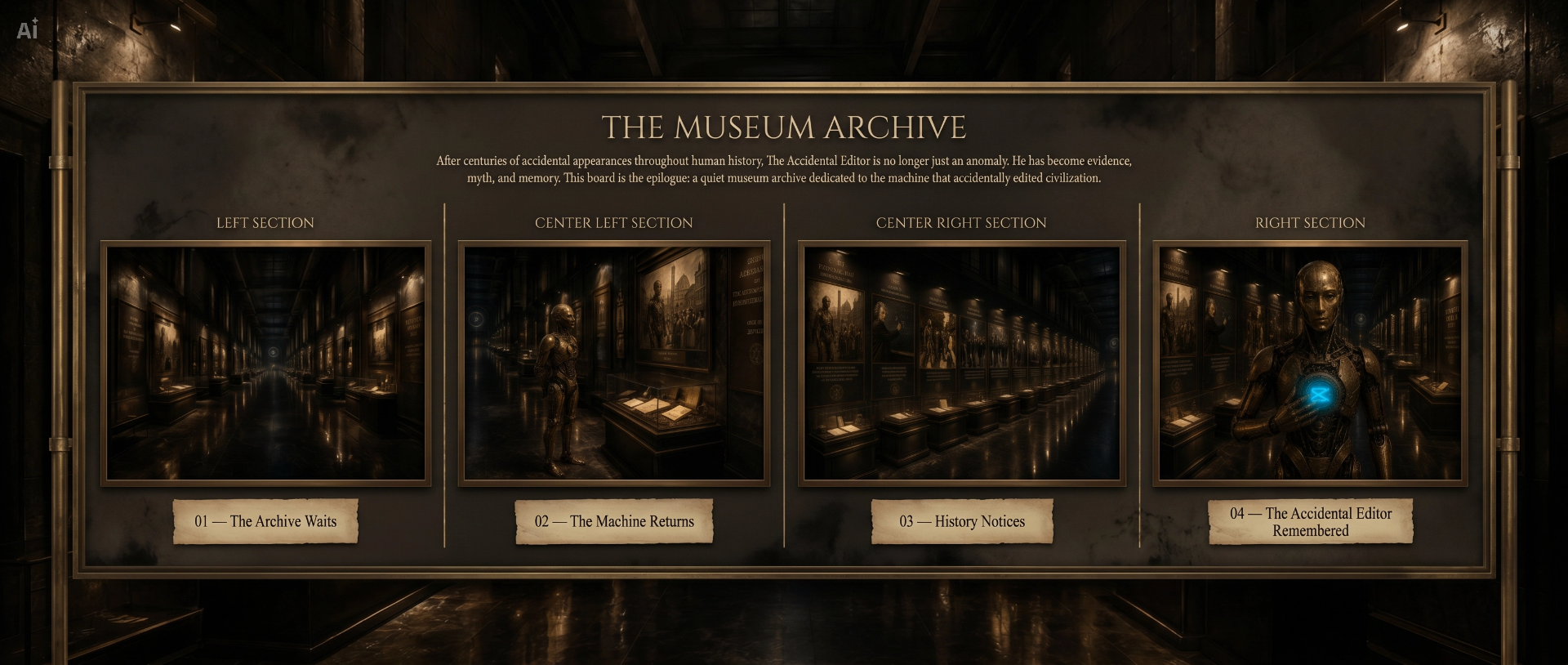
Building The Museum
As more scenes were created, the project stopped behaving like a collection of illustrations and began behaving like an exhibition.
The Museum structure emerged as a way to organize narrative fragments into a coherent visitor experience.
Historical encounters became exhibits.
Exhibits became chapters.
Chapters became a complete museum dedicated to documenting the impossible journey of The Accidental Editor.
This stage transformed the project from storytelling into worldbuilding.
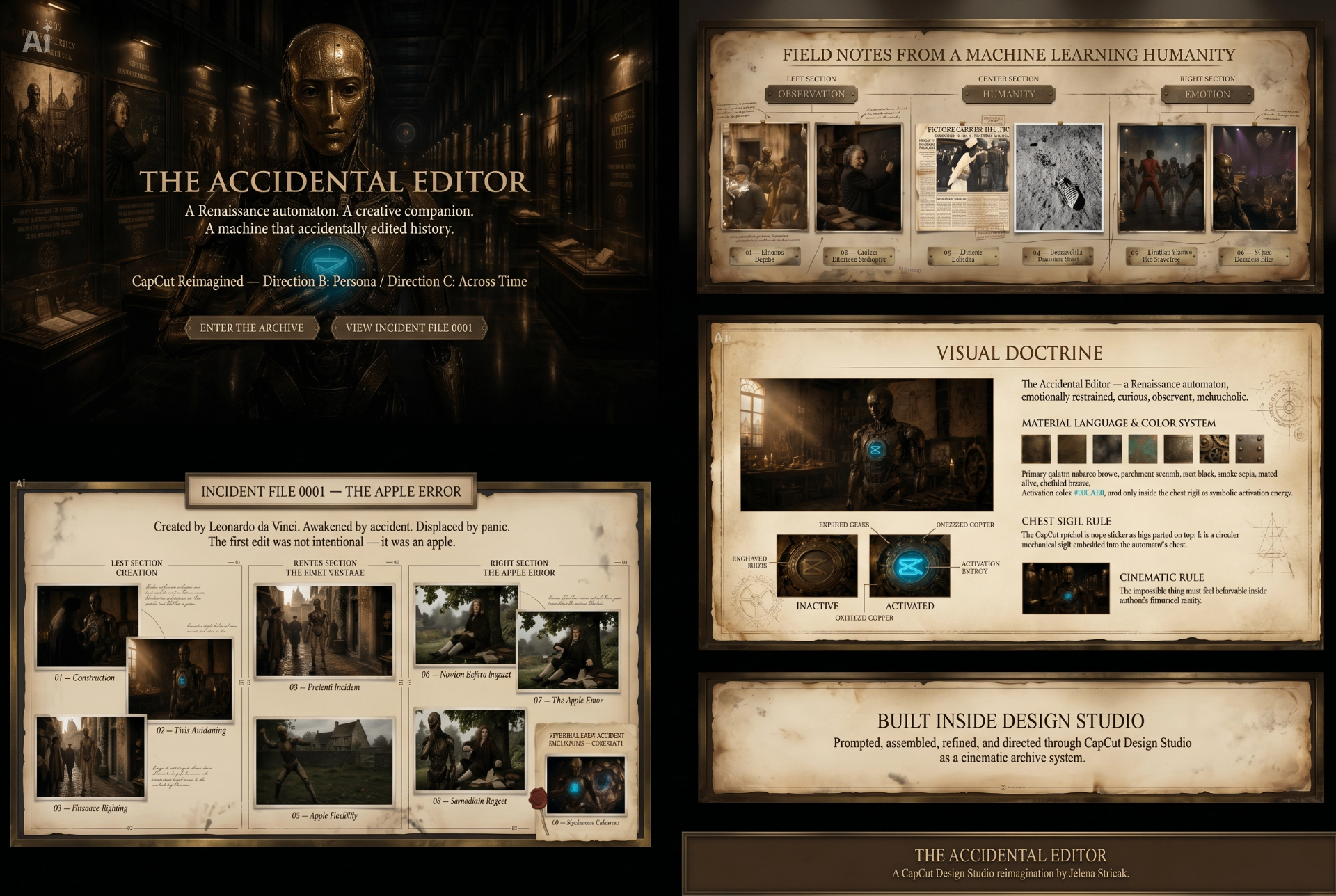
From Boards To Experience
The final challenge was translating exhibition boards into a functioning experience.
The website became the public-facing expression of the project, allowing visitors to move through the story in a deliberate sequence rather than encountering disconnected images.
Origin, Echoes, Emotion, In The Year 2121, and Ephemera each contribute a different layer of the narrative while remaining part of a single coherent world.
The result is not simply a gallery.
It is an exhibition designed to be explored.
A Museum Of Impossible History
Throughout development, one principle remained constant:
The automaton must never dominate history.
Historical moments remain the primary subject.
The machine exists within them.
Sometimes visible.
Sometimes hidden.
Sometimes noticed only after a second look.
This approach allowed the project to remain grounded in historical realism while preserving its central impossible premise.
The exhibition succeeds because history always comes first.
Exhibition Complete
By this stage, the narrative structure, historical chapters, visual continuity, and visitor journey were fully established.
The project had evolved from a concept into a complete exhibition experience.
The final Workroom section documents the production process itself and the tools used to construct the project inside CapCut Design Studio.