Inside Design Studio
Prompted. Tested. Corrected. Built under pressure.
This section documents the actual construction process inside CapCut Design Studio: asset gathering, prompt direction, visual testing, failed routes, continuity corrections, and final assembly. The finished Museum is the public face of the project; this page shows the machinery behind it.
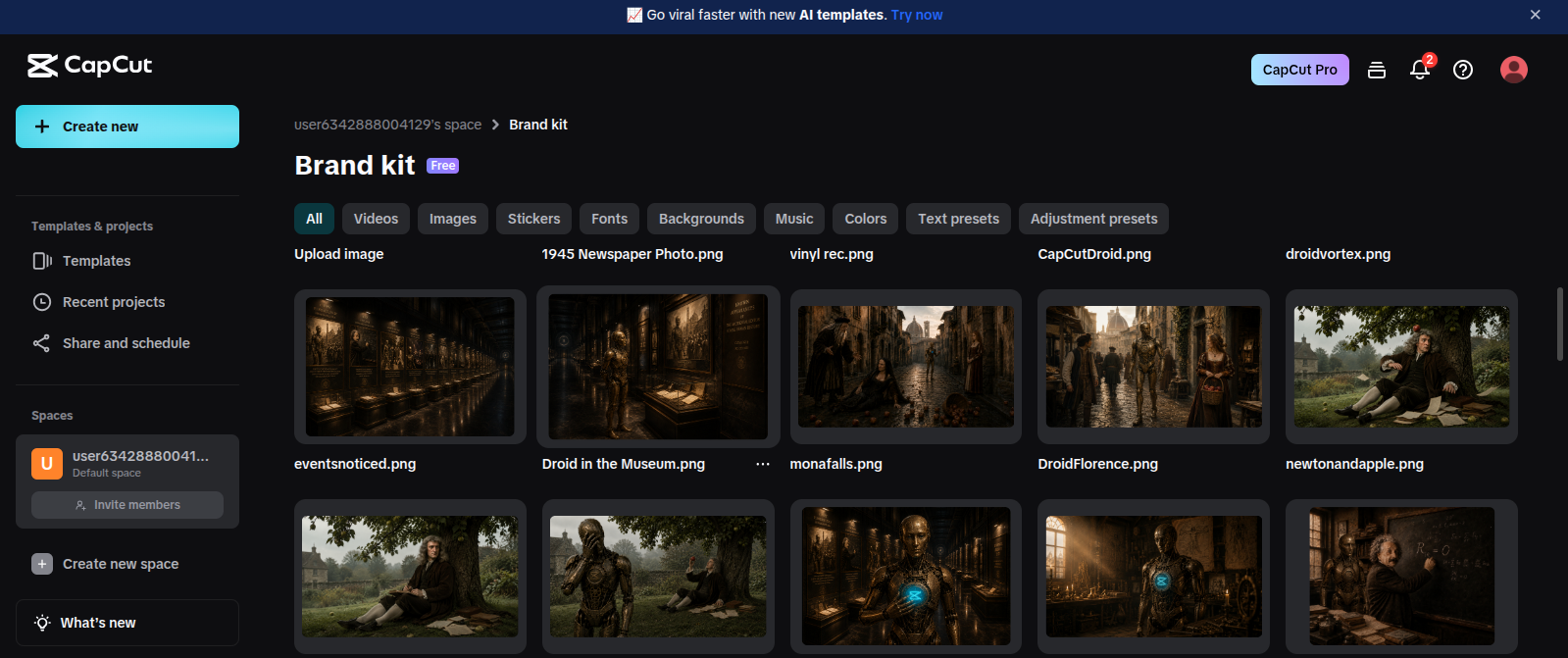
The working asset library: historical scenes, droid studies, posters, boards, and campaign material gathered before assembly.
Design Studio as Workspace
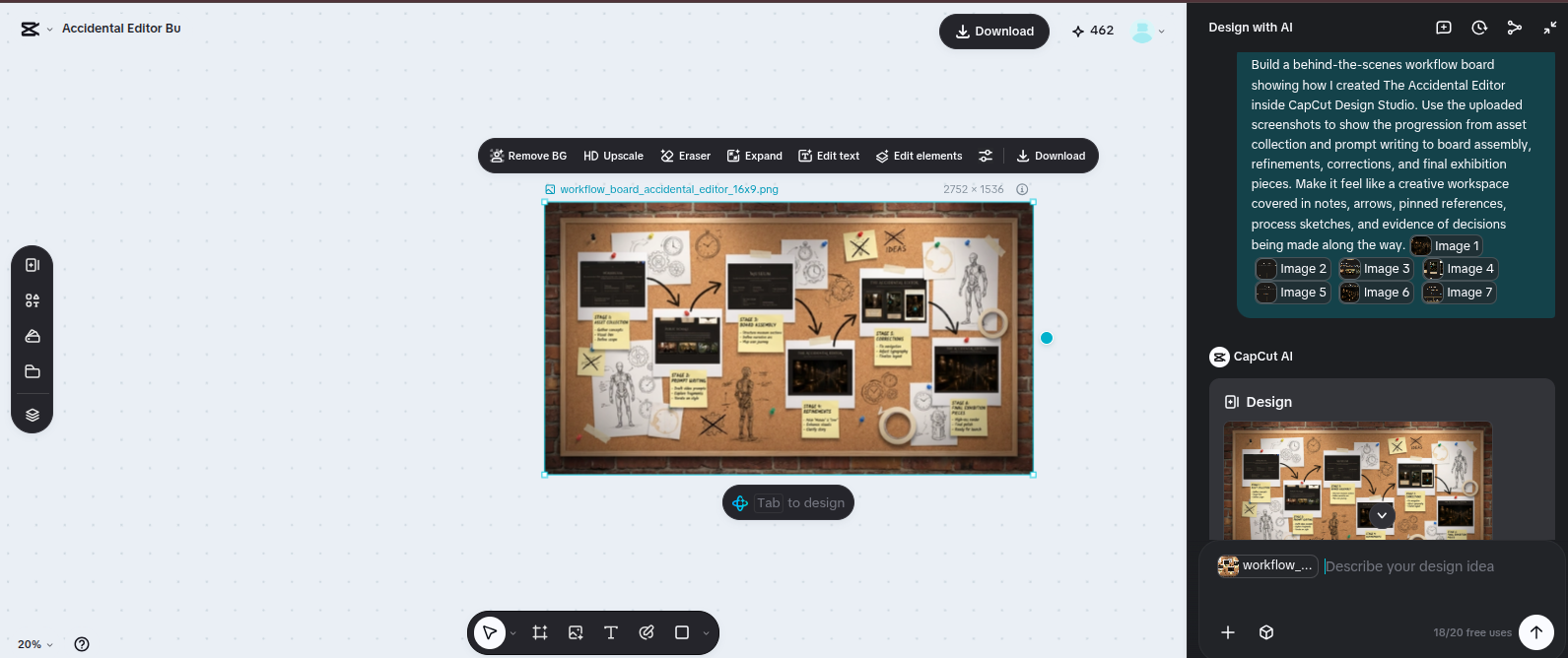
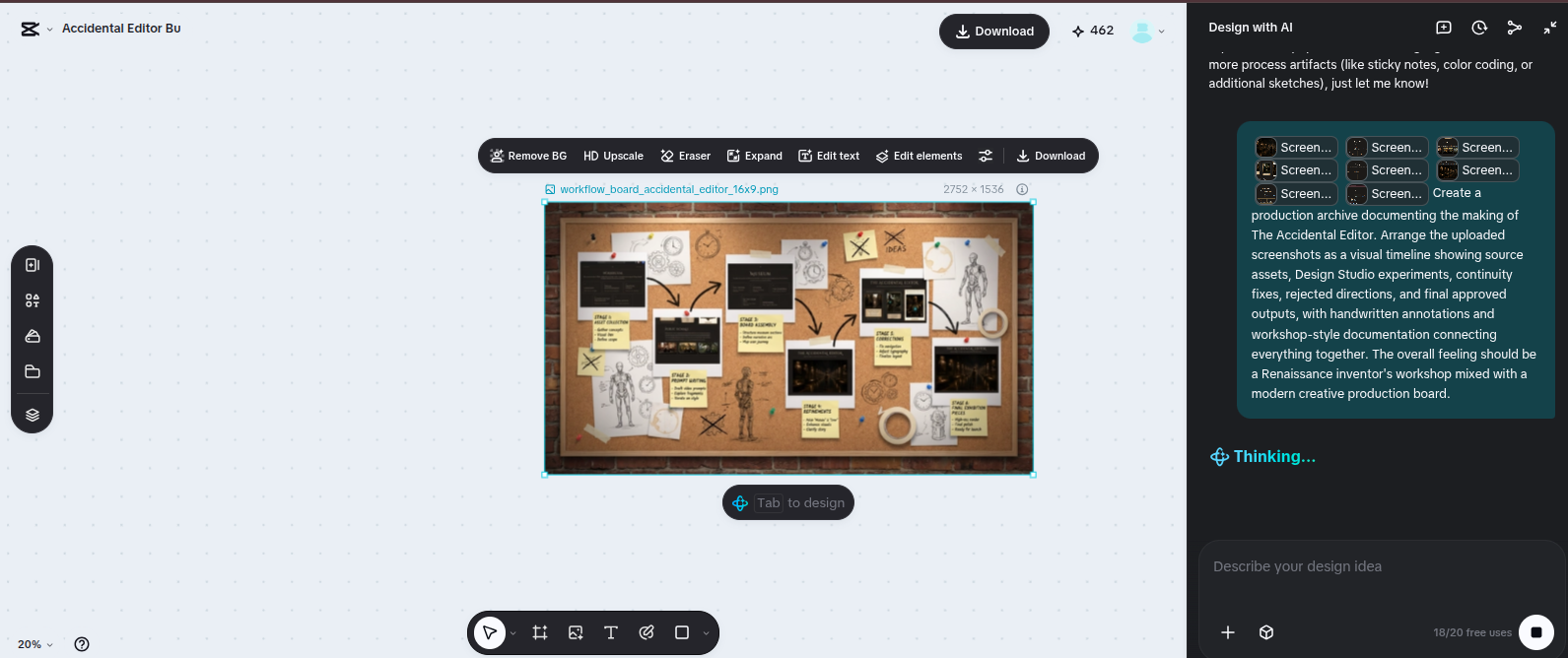
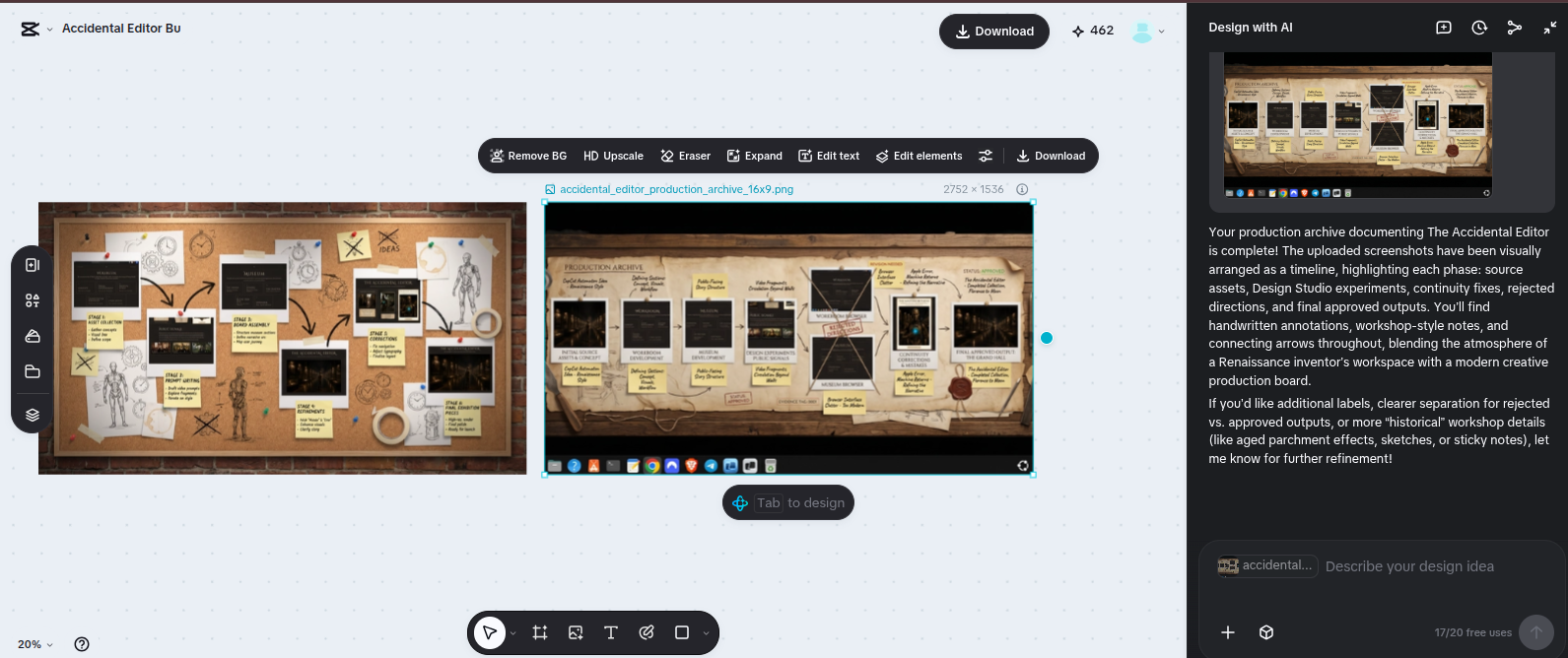
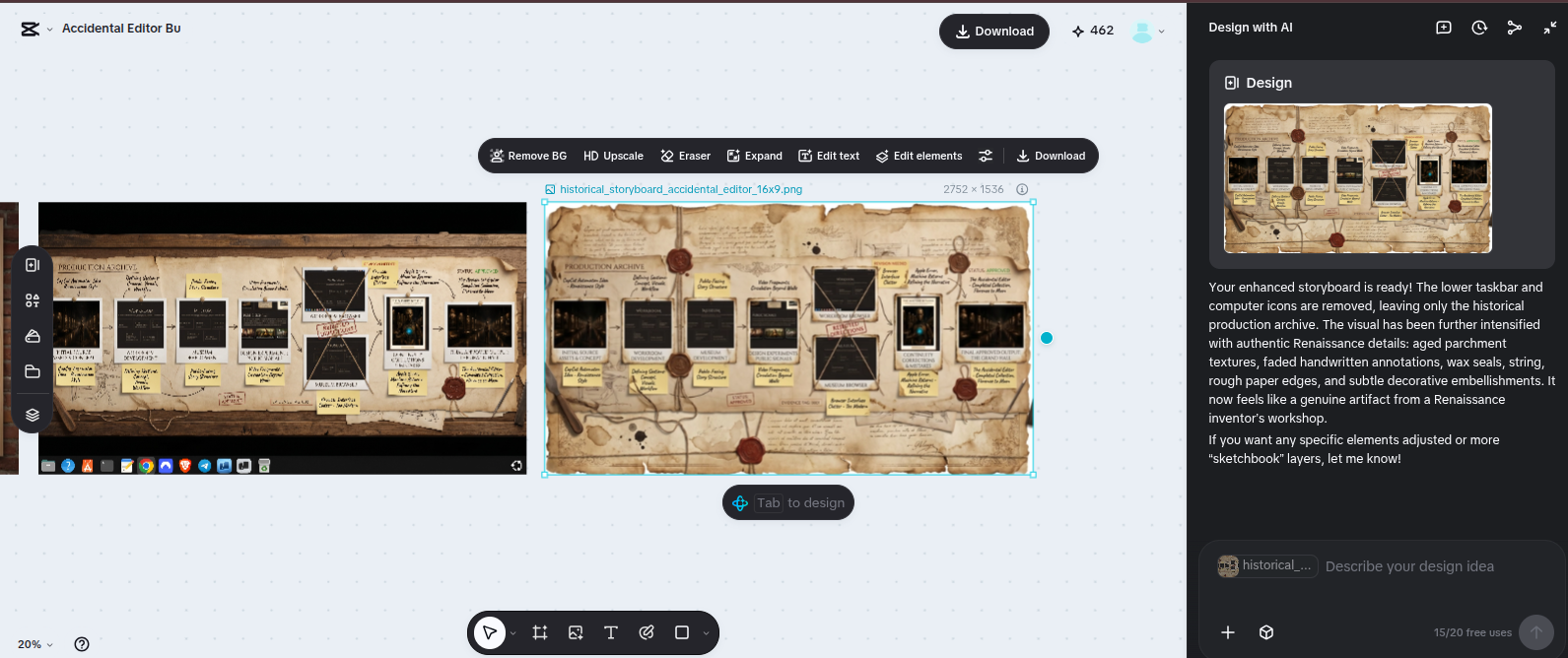
Design Studio was used as the active production canvas: uploading assets, testing boards, refining page structure, and assembling visual systems into a coherent exhibition. The screenshots matter because they prove the project was not a single image dump; it was directed, corrected, and rebuilt through the tool.
Character Continuity
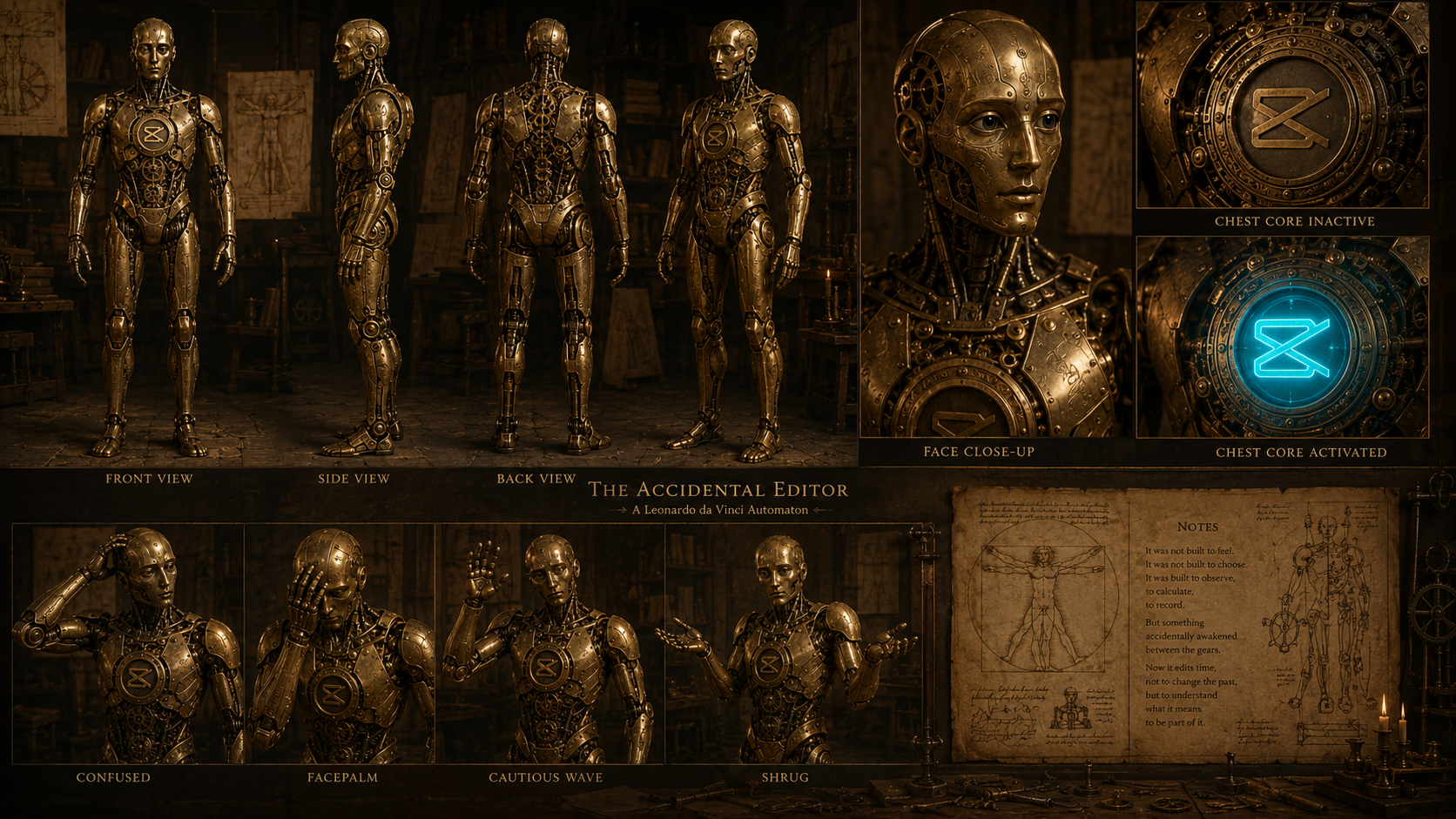
Character continuity sheet: adult human proportions, aged brass body, embedded chest sigil, restrained expressions, inactive and activated core states.
The Accidental Editor had to stay recognizable across centuries. The droid could shift context, but not identity: aged brass, Renaissance mechanics, human-scale body, melancholy restraint, and the CapCut sigil treated as a built-in mechanism rather than a pasted logo.
Process Boards
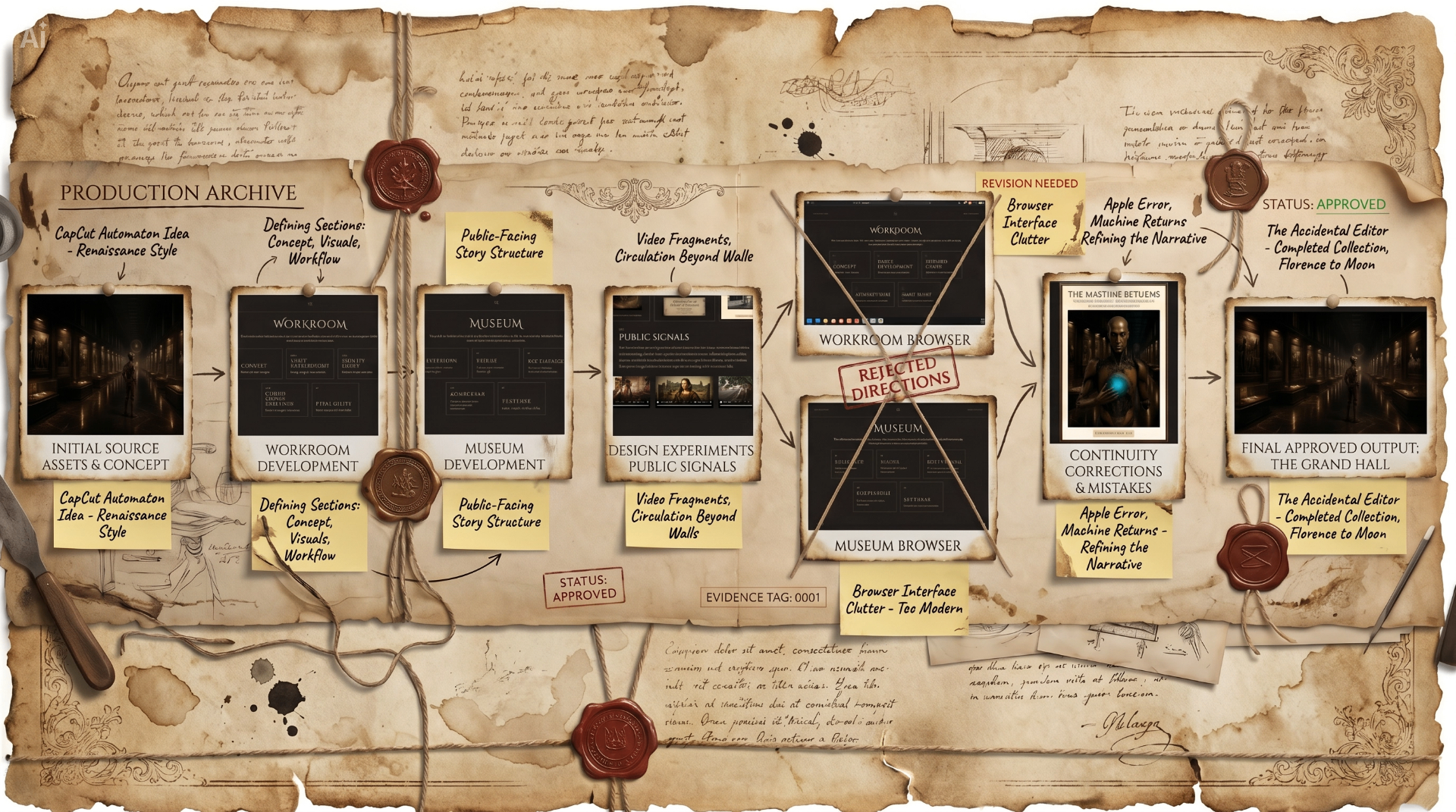
Final process proof: cleaner hierarchy, stronger documentation, better alignment with the museum world.
The process board evolved from a rough workflow diagram into a more believable production document. The point was not to make another poster; it was to show decisions, rejected directions, continuity fixes, and the route from concept to final exhibition.
Social Campaign Proof
Screen recording: social campaign material built inside Design Studio.
The social campaign material proves the project extended beyond static exhibition boards. It shows the public-facing layer: short-form fragments, campaign visuals, and circulation material built from the same fictional world.
What This Proves
This project follows Direction B first: CapCut as a persona — a creative companion embodied as The Accidental Editor. It also uses Direction C as the narrative engine, placing that persona across historical time. Design Studio was used to gather, test, assemble, correct, and present the world, not just generate isolated visuals.