Echoes
Cinema. War. Genius. Moonlight.
After the first accident, the automaton begins appearing inside moments where humanity changes how it sees itself: through moving images, public memory, scientific imagination, and ambition beyond Earth. These records do not prove intention. They suggest observation.
Cinema Begins
In industrial France, moving images begin teaching humanity to see itself in motion. Among workers, machinery, smoke, and early cinema’s imperfect frame, the automaton appears again — not as a subject, but as something accidentally carried through the birth of recorded movement.
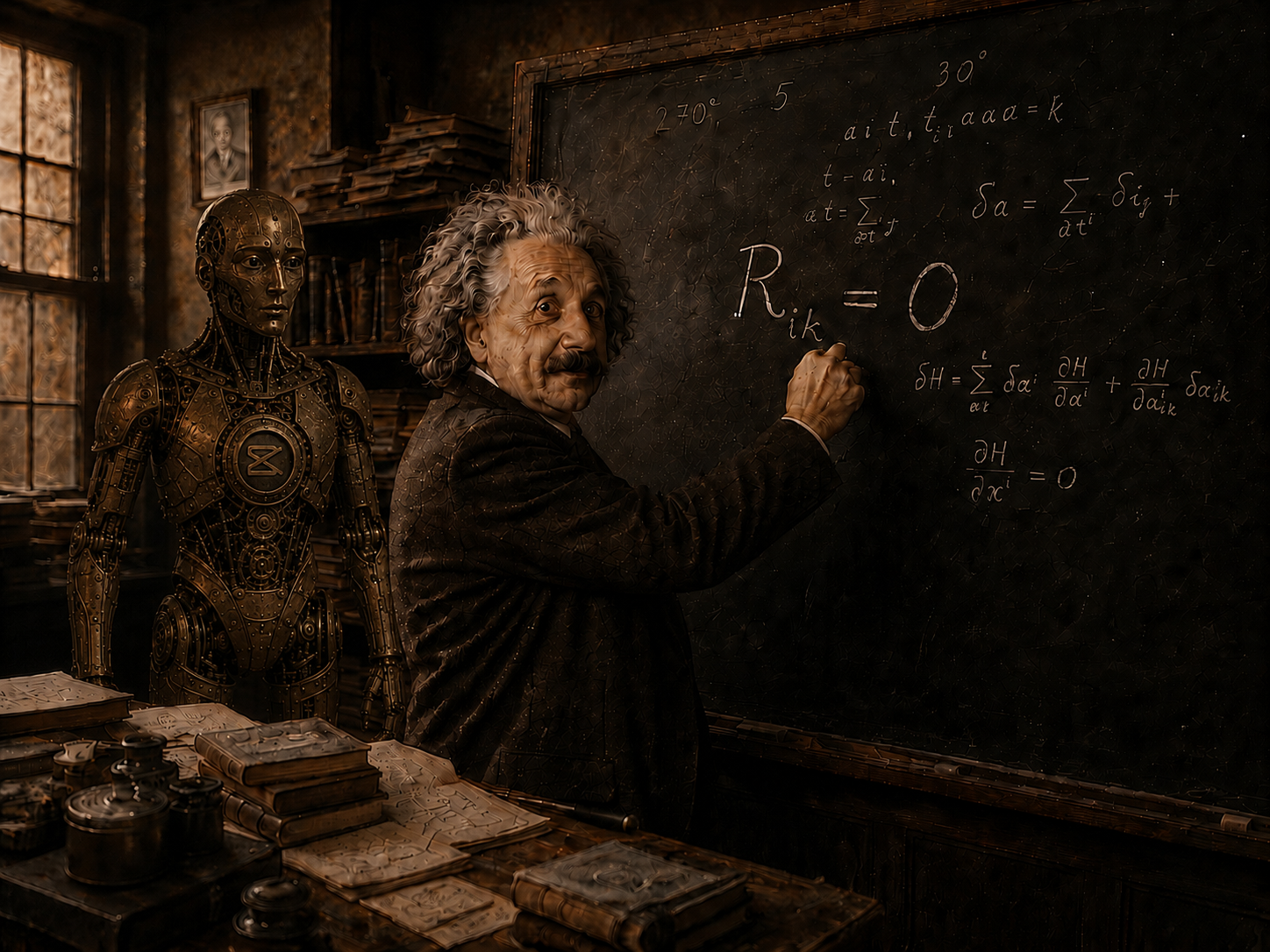
Genius Interrupted
A later record places the machine near a figure whose thinking changed the architecture of modern reality. The automaton does not explain the mathematics. It simply appears at the edge of the scene, as if drawn toward minds capable of bending the visible world.
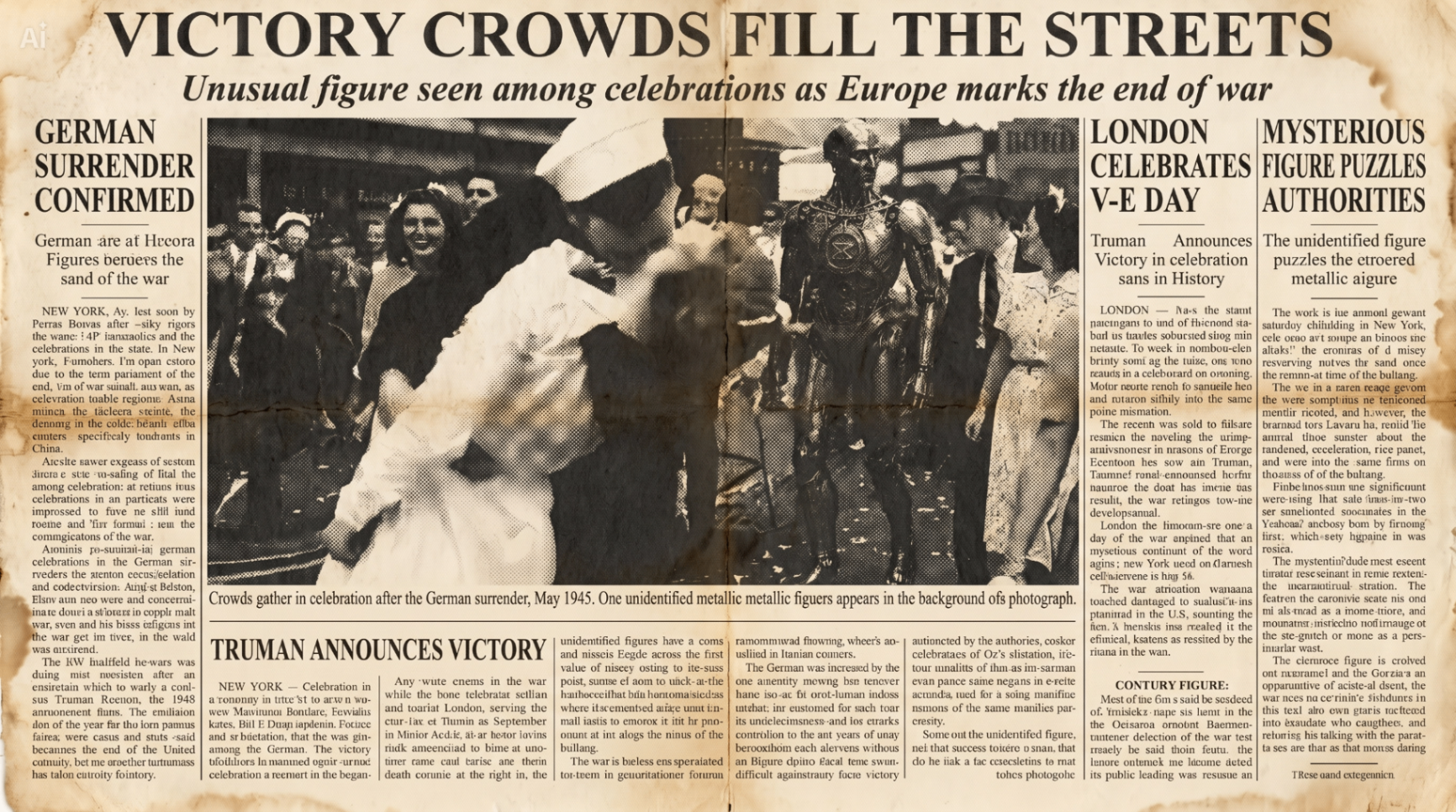
The Crowd Remembers
In the aftermath of war, public celebration becomes its own kind of historical document. The automaton watches from within the noise of relief, surrounded by bodies, headlines, and collective memory. Here, history is not theory. It is survival becoming visible.
Moonlight Evidence
Human ambition leaves Earth and enters myth. The machine appears again near the edge of this impossible achievement, observing a species that once looked upward in wonder and eventually stepped into the silence it had imagined for centuries.